The New Wave of Iranian Architecture
In contemporary Iranian architecture, for various reasons, it is rare to witness a coherent movement with a clear, theoretical, and continuous intellectual line that can be presented as a distinct artistic-architectural current. Yet, undoubtedly, Engineer Hadi Mir-Miran is among the few architects who, despite experiencing diverse professional periods, has consistently advanced along this path, particularly since the establishment of Naghsh-e Jahan Pars Company, navigating all its ups and downs.
His endeavor to accurately grasp the essence of Iranian architecture—with all its spatial and physical characteristics, its taste and color—and his commitment to spatial evolution and redefining it, aims to reclaim the continuous contribution of Iranian architecture in world history and connect it to contemporary global architecture. More importantly, he recognizes that the path of modern architecture does not lie in merely imitating historical forms or dissolving into Western contemporary architecture, but rather in transferring and evolving the qualities and ideas that, at each historical moment, became the “trace of time on space” through the technology and professional capabilities of that era. His continuous efforts in this regard have made his professional work today a subject for serious critique, study, and teaching.
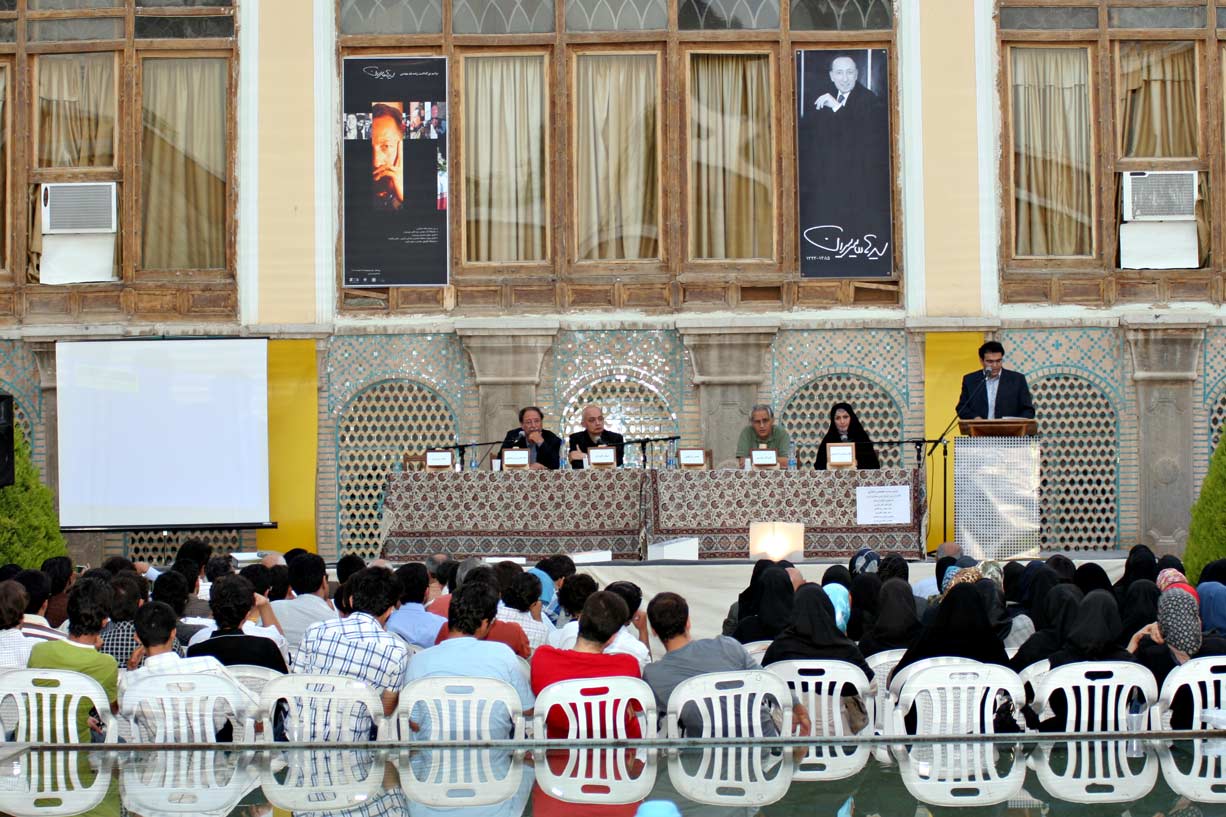
This very fact has motivated this group, during his lifetime, to fill the gap by organizing such exhibitions. Although limited time and resources have perhaps prevented the full realization of this ambition, despite great effort, the regret of holding an exhibition in the presence of Engineer Mir-Miran intertwines with the regret of not having been able to realize monumental works such as the Farhangestan (Academy).